

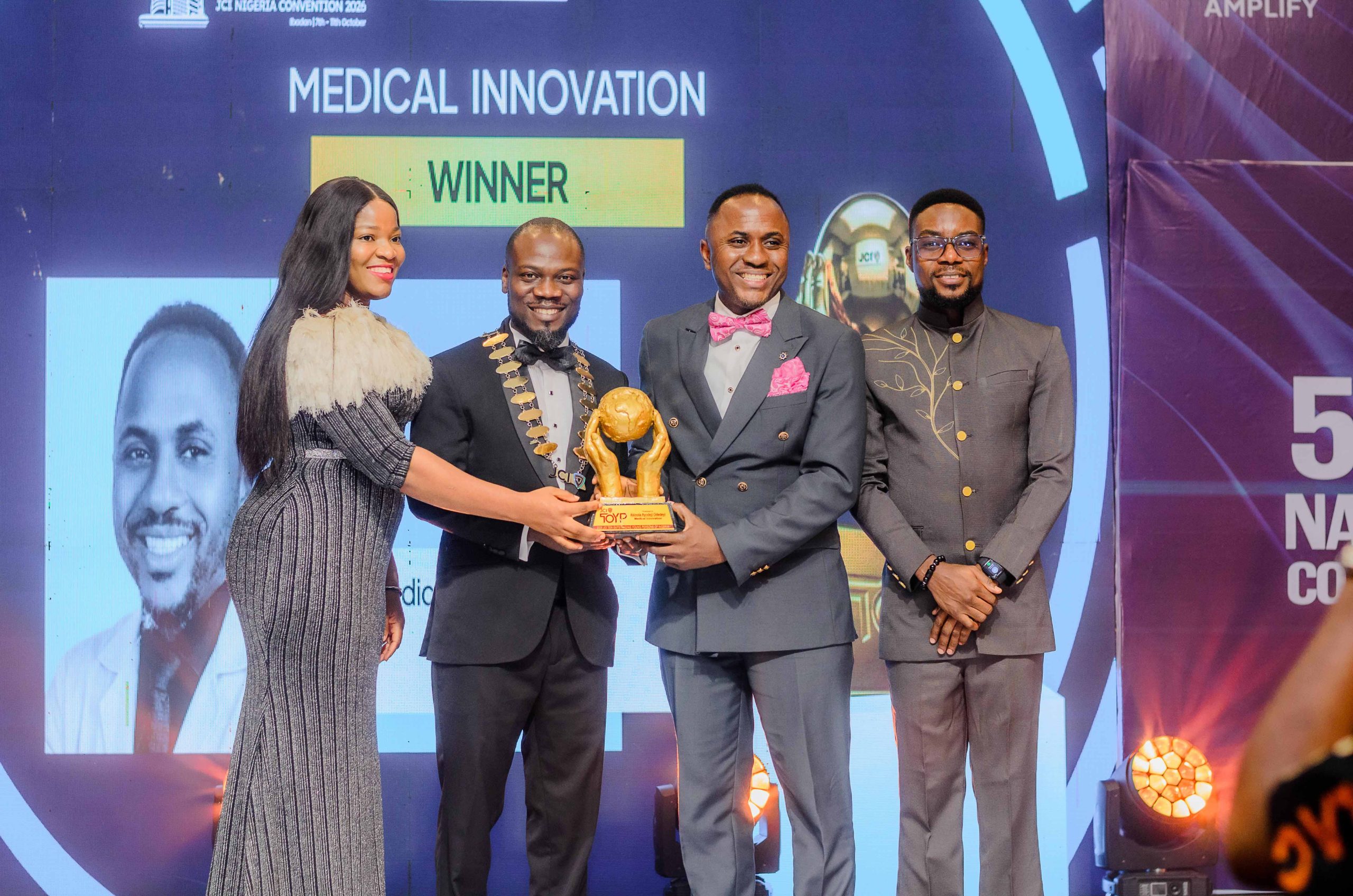

ILE-IFE – Dr. Akinola Odedeyi of the Obafemi Awolowo University Teaching Hospitals Complex (OAUTHC), Ile-Ife, has been named one of Nigeria’s Ten Outstanding Young Persons for 2026. He won the Medical Innovation category of the Junior Chamber International (JCI) Nigeria National Awards for his work in medical research and affordable healthcare technology.
The award was presented on 10th October, 2026, at the JCI Nigeria National Convention in Ibadan. It followed a nationwide process that drew 675 nominees, an independent assessment of professional achievements, research, leadership and community service, and public voting by 7,738 people. KPMG Nigeria independently reviewed the judges’ evaluations and the combined results.
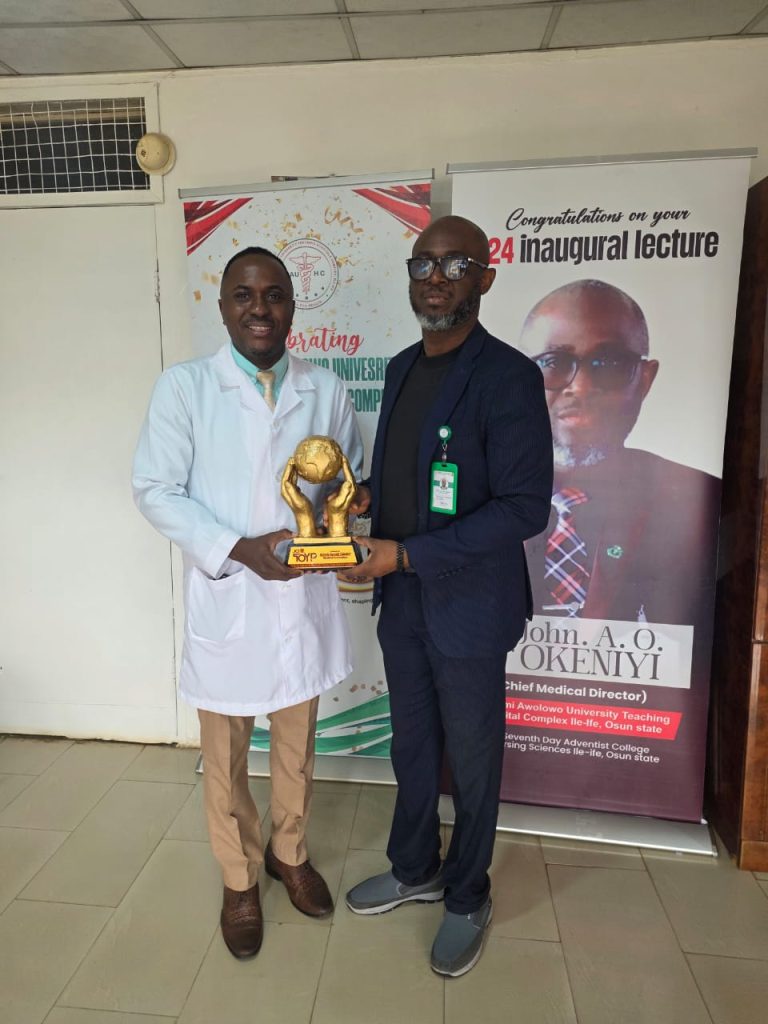
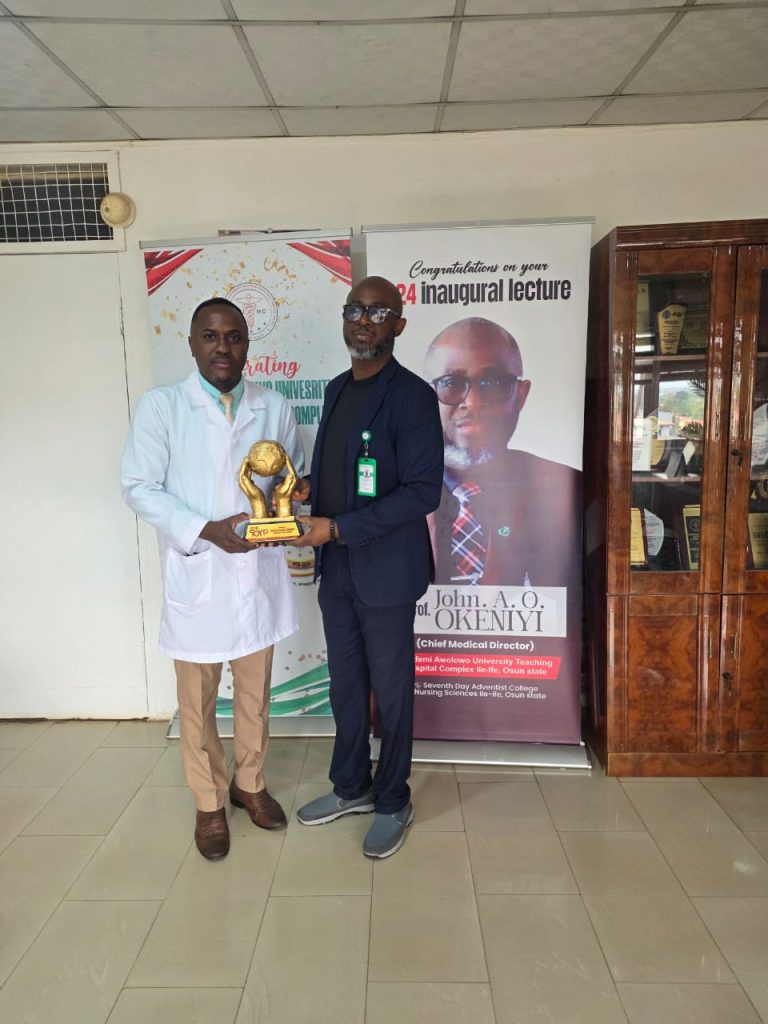
Dr. Odedeyi thanked God and called the award an honour and a renewed responsibility to serve his profession and community. He also thanked his family, mentors, colleagues and collaborators, as well as OAUTHC, its Chief Medical Director, Prof. John Okeniyi, and the hospital’s management for fostering an environment where clinical excellence, research and innovation can flourish.
At the centre of his win is Wide-NAB, a breast biopsy technique designed to cut the cost of obtaining tissue samples for diagnosing breast cancer. He was motivated by the financial burden on patients. An OAUTHC study found that nearly three-quarters of families had to borrow money to pay for breast cancer care. He built the technique on earlier work by Yadav and colleagues in India.
He also invented the T-Lock, a device that maintains suction during manual biopsy. In addition, he led a team of clinical and engineering collaborators in Nigeria and the United Kingdom to develop PrecisionVac, an automated suction device. Both inventions have been patented in Nigeria.
In a 30-patient pilot study at OAUTHC, Wide-NAB produced adequate tissue samples in every case. The diagnoses matched those from the standard technique, while the cost of biopsy consumables fell by about 92 per cent. Further studies are needed to confirm how it performs across different hospitals and operators, but the early results are encouraging. Dr. Akinola believes that lowering the cost of diagnosis could help more women get timely care and treatment.
His journey has been marked by resourcefulness and teamwork. He worked with his younger brother, Dr. Temitope Odedeyi, an electrical and electronic engineer and Senior Research Fellow at University College London, to combine clinical insight with engineering skill.
The first T-Lock prototype was made in a local welder’s workshop in Ile-Ife. When suitable tissue-mimicking models were unavailable, the team tested the device on fresh cattle tissue from local abattoirs. Later, ethically approved studies on live pigs involved animal scientists and veterinary doctors at Obafemi Awolowo University, with anaesthesia expertise from a veterinarian at the University of Ibadan.
The Association of Radiation and Clinical Oncologists of Nigeria (ARCON) funded the initial pilot study. Memorial Sloan Kettering Cancer Center (MSKCC), New York, later supported the research through its Global Cancer Research and Training programme.
A Record of Achievement
Dr. Odedeyi’s honours extend beyond breast biopsy innovation:
- 2025: Shalina Rising Star Award for the Best Medical Brain in Nigeria, after his residency dissertation on visceral fat and stroke was judged the best across all specialties among 786 early-career specialists nationwide.
- 2025: Sole global awardee of the European School of Radiology’s Exchange Fellowship in Oncologic Imaging, undertaken at Ludwig Maximilian University of Munich, Germany.
- 2025: Best Abstract Award at the Basic and Translational Cancer Research Symposium, attended by participants from 25 countries, for his team’s preclinical research on bitter leaf (Vernonia amygdalina) in breast cancer.
- 2020: First prize in the Nigerian Medical Association’s National Medical Essay Competition for BrainSTORM, a framework that connects the skills of Nigerian doctors abroad with strategies to strengthen the domestic health workforce.
He is also Secretary of the Research and Innovation Committee of the Breast Imaging Society of Nigeria, and Secretary of the African Organisation for Research and Training in Cancer’s special interest group on access to innovative cancer technologies and therapies.
What Nigerian Healthcare Needs
Dr. Odedeyi said medical solutions must reflect the realities faced by patients and health workers. He advocates locally developed technologies that are affordable, reliable, easy to maintain and suited to the conditions in which care is delivered. He also pointed to better referral pathways, coordinated appointments and stronger laboratory services as ways to reduce delays and out-of-pocket costs.
He urged teaching hospitals to support innovation through seed grants, mentorship, protected research time, shared prototyping facilities, research infrastructure, and guidance on ethical and regulatory requirements. Promising inventions, he said, must still be rigorously evaluated before they are widely adopted. He added that affordable diagnostics must be backed by better health financing and insurance so that patients can complete their treatment.
Advice for Young Innovators
He hopes to use the national recognition to build stronger partnerships among clinicians, engineers, universities, hospitals, manufacturers and industry, and to inspire younger health professionals to pursue research. His advice to aspiring innovators:
- Identify practical problems in your workplace.
- Study the existing evidence.
- Collaborate across disciplines.
- Seek mentorship and funding.
- Stay committed to scientific integrity, which means acknowledging previous work, crediting collaborators, reporting findings honestly and letting evidence guide your ideas.
A Vision for the Future
Dr. Odedeyi envisions a Nigeria that conceives, engineers, validates, manufactures and exports medical technologies to meet healthcare challenges at home and abroad. That, he said, will take sustained collaboration among hospitals, universities, engineers, manufacturers, government and investors, along with investment in the people and institutions that turn clinical problems into practical solutions.
He hopes to leave behind useful medical technologies, mentor younger professionals and build collaborations that keep producing results. For him, the greatest achievement is helping patients receive care they might otherwise have missed.